Peristaltic pumps
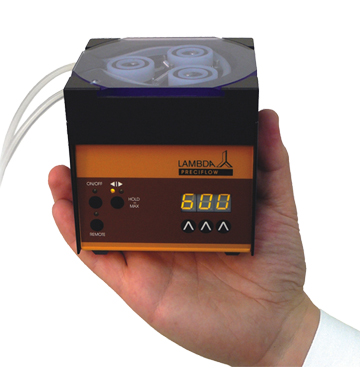
Peristaltic pumps
were developed as the result of twenty years of laboratory experience and involved the systematic elimination of the imperfections found in other peristaltic pumps on the market.
! NEW ! - The new peristaltic pump touch are now available!
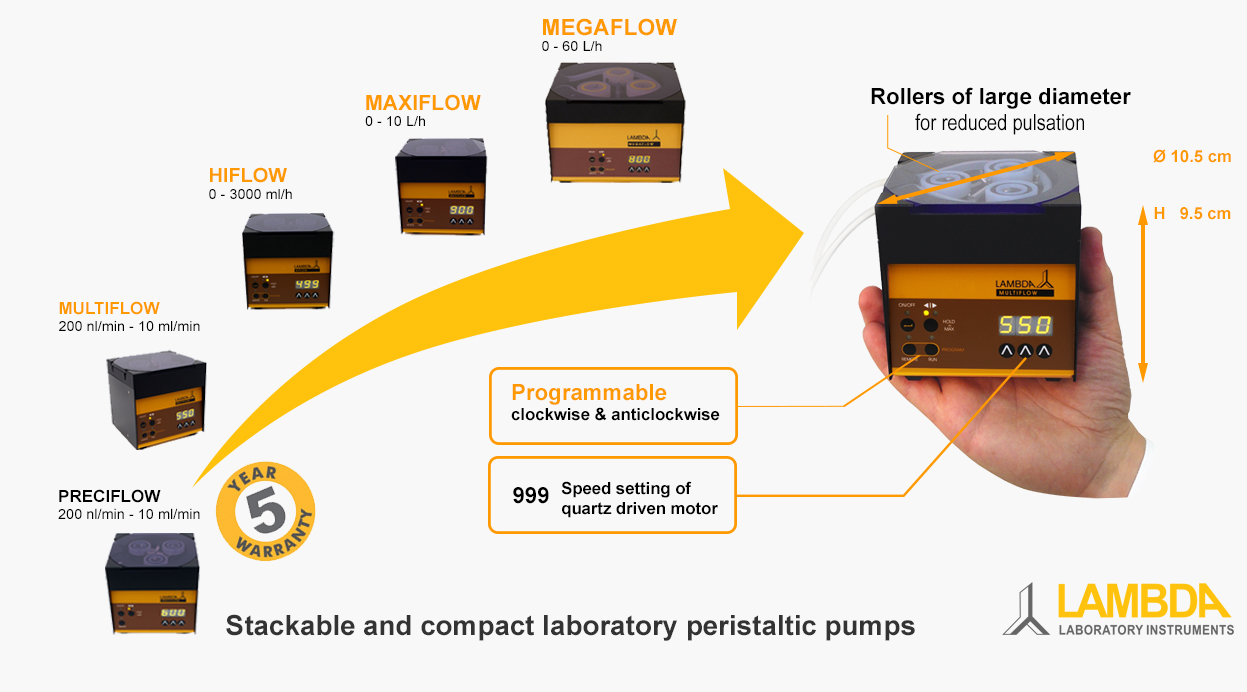
LAMBDA PRECIFLOW, MULTIFLOW, HiFLOW, MAXIFLOW and MEGAFLOW peristaltic liquid pumps
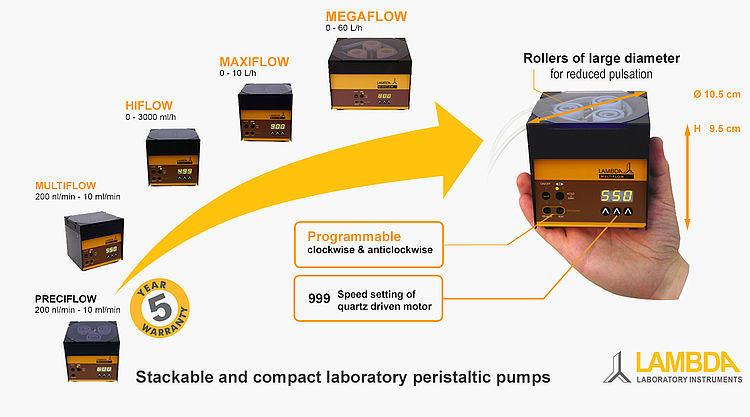
Properties of LAMBDA peristaltic liquid pumps
Practical, precise and reliable peristaltic pump which is the most compact in its class:
- Flow rates from 0.01 to 60,000 ml/hour
- Most compact peristaltic pump of its class on the market
- Greatly extended tubing life and decreased pulsation
- Automatic switch ON and OFF without using a timer
- Very economic in use while using low cost tubing without stoppers
- 5 year warranty on LAMBDA PRECIFLOW and MULTIFLOW pumps
- Low maintenance
- Meets safety standards CE and IEC 1010/1 for the laboratory
The special mechanics of LAMBDA peristaltic pumps has been developed because no pump can be used for continuous fermentation experiment lasting up to eight weeks.
Stand-alone laboratory peristaltic pump
- Digital speed setting from 0 to 999 (in clockwise and counter-clockwise direction)
- Flow rate programmable in both directions: MULTIFLOW, HiFLOW, MAXIFLOW and MEGAFLOW
- Plug-in power supply: 90-240 V / AC, 50-60 Hz, output 12 V / DC
The peristaltic pumps can be used together with laboratory fermenters, bioreactors, fraction collectors, autosamplers and other lab equipment.
Remote control (analog and digital) of pumps
- ON/OFF by an external signal
- Control over the whole speed range (0 - 10 V DC, optional: 0-20 or 4-20 mA)
LAMBDA peristaltic pump can be connected to the process control software (PCS) or to PC/laptop via RS-485 interface or RS-232 interface.
Optional accessories for peristaltic pumps
LAMBDA offers the following optional accessories with peristaltic pumps:
- Silicone pump tubing, Viton pump tubing
- Foot-switch controlled liquid dispensing
- Cable to connect with car battery (filed application)
- PUMP-FLOW INTEGRATOR for recording of total volume pumped
The unique flow integrator LAMBDA INTEGRATOR makes the LAMBDA peristaltic pumps excellent for the use in automatically controlled systems e.g. fermentation, bio cultures, chemical synthesis, fraction collection, etc.
Several remote control possibilities:
- RS-485 or RS-232 interface (optional) for connection to PC software
- Cables and connections for remote control (analog and digital)
- Pump control software PNet for data acquisition, real-time visualization and remote control
Problems with the traditional peristaltic pumps are solved!
The most frequent problems of traditional peristaltic pumps are:
- Aspiration of the tubing by the mechanics
- Rupture of the tubing and leaking of the solution
- Flow rate decrease over time
- When a continuous process is interrupted a lot of time and money are lost
During the development of the new LAMBDA peristaltic pump mechanics all aspects of existing peristaltic pumps have been analyzed and finally an efficient solution has been found.
What makes LAMBDA laboratory pumps so efficient?
Instead of small rollers, which are used by most pump producers, bearings of a larger diameter with glass beads are used. This reduces pulsations, friction and mechanical strain on the tubing which leads to better pump performance.
The bearings glide over the tubing so gently, unlike other pumps, it is not necessary to prevent the movement of the tubing by a special fixation. In this manner, the life time of the tubing is considerably increased.
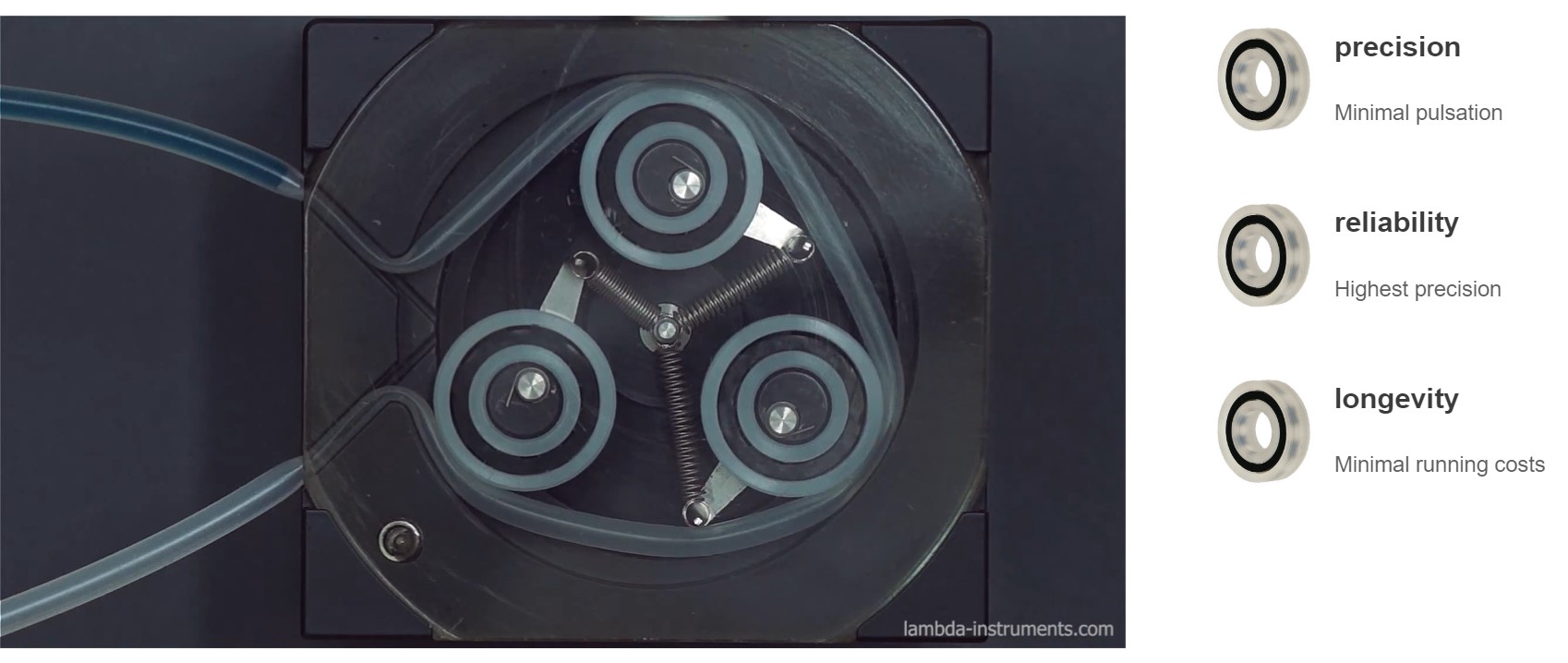
The pressure on the tubing is delivered individually through an off-centre lever and spring made of stainless steel.
This assures a minimal pressure is applied to the tubing which still guarantees a good functioning of the pump without unnecessary deformation of the tubing.The spring also reduces the liquid pressure to approx. 1 bar. It is useful when the tubing line is blocked, for any reason.
A special off-centre lever using a spring of non-corrosive material applies the compression force on the tubing softly and gradually.Instead of rollers we use special plastic ball bearings with glass beads. The gliding of such rollers requires only a minimal force and the corrosion resistance in the case of spill is excellent.A special off-centre lever using a spring of non-corrosive material applies the compression force on the tubing softly and gradually.Instead of rollers we use special plastic ball bearings with glass beads. The gliding of such rollers requires only a minimal force and the corrosion resistance in the case of spill is excellent.
The final pressure of the liquid is reduced by the spring to 0.1–0.2 MPa (according to the tubing used). The pressure does not increase even when the line is blocked.
The pump head is large and has two centers of asymmetry, which reduces pulsation several times. The head is made of hard, chemically stabilized material
The stepping motor or BLDC motor, driven by quartz-controlled electronics, assures a high precision of the flow rate. The ratio of speed control is 1:1000.
The laboratory space is very expensive, therefore we have made our peristaltic pumps as compact as possible (all have just 1 l of volume). They are several times smaller than other peristaltic pumps on the market and therefore, so handy in use.
Benefits of great importance for your laboratory
- Even without any fixation the tubing will not move at all in or out of the head.
Since the lateral forces on the tubing have been eliminated, no stoppers are required. - Tubing life increases considerably and flow rates remain constant, since the tubing compression is kept in the range of elasticity of the tubing.
- The tubing economy is very important. Low cost tubing can be used with good results.
LAMBDA PRECIFLOW peristaltic pump will be paid back after consumption of about 80 m of tubing.


Programming: up to 99 steps of speed and time
Time resolution: 0 to 999 minutes in 1 minute steps; 0 to 99.9 minutes in 0.1 minute steps
Accuracy: ± 1%
Reproducibility: ± 0.2 % (electronics)
Flow rate range:
PRECIFLOW & MULTIFLOW: 0.2 µl/min - 600 ml/h
HIFLOW: 1 µl/min - 3,000 ml/h
MAXIFLOW: 3 µl/min - 10,000 ml/h
MEGAFLOW: 0.02 ml/min - 60,000 ml/h
Tubing: Silicone tubing or other materials having similar elasticity
Non-volatile memory: storage of all settings
Maximum pressure:
PRECIFLOW, MULTIFLOW, HIFLOW & MAXIFLOW: approx. 0.1 MPa in clockwise rotation; approx. 0.15 MPa in counter-clockwise rotation
MEGAFLOW: approx. 0.18 MPa in clockwise rotation; approx. 0.2 MPa in counter-clockwise rotation
Motor :
PRECIFLOW & MULTIFLOW: microprocessor controlled stepping motor
HIFLOW, MAXIFLOW & MEGAFLOW: microprocessor controlled brushless long life BLDC motor with neodymium magnets
Speed control range: 0 - 999
Interface: RS-485 or RS-232 (optional)
Remote control : 0-10 V; (option 0-20 or 4-20 mA); foot switch; ON/OFF; ! For safety reasons the voltage of the remote signal to earth must not exceed 48 V DC
Dimensions : 10.5 (W) × 9.5 (H) × 10.5 (D) cm (PRECIFLOW, MULTIFLOW, HIFLOW & MAXIFLOW); 18 (W) x 13 (H) x 16 (D) cm (MEGAFLOW)
Weight: <1 kg (PRECIFLOW & MULTIFLOW); 1.2 kg (HIFLOW & MAXIFLOW); 2.5 kg (MEGAFLOW)
Safety: CE, meets IEC 1010/1 norm for laboratory instrument
Operation temperature: 0 – 40 ⁰C
Operation humidity: 0-90% RH, not condensing
- EN - LAMBDA Laboratory Peristaltic Pumps LEAFLET (pdf)
- EN - (Old Operation Manual - LAMBDA PRECIFLOW peristaltic liquid pump – tubing pump) (pdf)
- EN - (Old Operation Manual - LAMBDA HIFLOW laboratory peristaltic pump – tubing pump) (pdf)
- EN - (Old Operation Manual - LAMBDA MULTIFLOW peristaltic dosing pump – tubing pump) (pdf)
- EN - (Old Operation Manual - LAMBDA MAXIFLOW peristaltic pump – tubing pump) (pdf)
- EN - (Old Operation Manual - LAMBDA MEGAFLOW peristaltic pump – tubing pump) (pdf)
- EN - Infographics: LAMBDA laboratory peristaltic pumps make your work simple and easy (pdf)
- EN - Utilization of peristaltic pumps (pdf)
- EN - User manual - LAMBDA laboratory peristaltic pumps (pdf)
- DE - Broschüre LAMBDA Schlauchpumpen für das Labor (pdf)
- DE - Bedienungsanleitung - LAMBDA Schlauchpumpen (pdf)
- DE - (Alte Bedienungsanleitung - PRECIFLOW Schlauchpumpe - Peristaltikpumpe) (pdf)
- DE - (Alte Bedienungsanleitung - MULTIFLOW Schlauchpumpe - Peristaltikpumpe) (pdf)
- DE - (Alte Betriebsanleitung - MAXIFLOW Schlauchquetschpumpe - Peristaltikpumpe) (pdf)
- DE - (Alte Betriebsanleitung - HIFLOW Schlauchquetschpumpe - Peristaltikpumpe) (pdf)
- DE - Vielfältige Anwendungsmöglichkeiten der peristaltischen Pumpen (pdf)
- IT - Manuale operativo - Pompa peristaltica LAMBDA PRECIFLOW (pdf)
- IT - Manuale operativo - Pompa peristaltica LAMBDA HIFLOW (pdf)
- IT - Manuale operativo - Pompa peristaltica LAMBDA MULTIFLOW (pdf)
- IT - Manuale operativo - Pompa peristaltica LAMBDA MAXIFLOW (pdf)
- FR - (Ancien mode d'emploi - Pompe péristaltique PRECIFLOW) (pdf)
- FR - Mode d'emploi - Pompes Péristaltiques LAMBDA (pdf)
- FR - POMPES PÉRISTALTIQUES PRECIFLOW-MULTIFLOW-HiFLOW-MAXIFLOW - BROCHURE (pdf)
- FR - Utilisation des pompes péristaltiques (pdf)
- FR - (Ancien mode d'emploi - Pompe péristaltique HIFLOW) (pdf)
- FR - (Ancien mode d'emploi - Pompe péristaltique MAXIFLOW) (pdf)
- FR - (Ancien mode d'emploi - Pompe péristaltique MULTIFLOW) (pdf)
- CZ - Návod k použití - Peristaltická pumpa LAMBDA MAXIFLOW (pdf)
- CZ - Návod k použití - Peristaltická pumpa LAMBDA PRECIFLOW (pdf)
- CZ - Návod k použití - Peristaltická pumpa LAMBDA MULTIFLOW (pdf)
- CZ - LAMBDA peristalticke pumpy letak (pdf)
- ES - Instrucciones de operación - MULTIFLOW - bomba peristáltica - bomba de tubería (pdf)
- ES - BOMBAS PERISTÁLTICAS PRECIFLOW-MULTIFLOW-HiFLOW-MAXIFLOW-MEGAFLOW - FOLLETO (pdf)
- ES - Usos de las bombas peristalticas (pdf)
- ES - Instrucciones de operación - HIFLOW - bomba peristáltica - bomba de tubería (pdf)
- ES - Instrucciones de operación - PRECIFLOW - bomba peristáltica - bomba de tubería (pdf)
- ES - Instrucciones de operación - MAXIFLOW - bomba peristáltica - bomba de tubería (pdf)
- RU - ПЕРИСТАЛЬТИЧЕСКИЕ НАСОСЫ LAMBDA - PRECIFLOW – MULTIFLOW – HIFLOW – MAXIFLOW - MEGAFLOW - ЛИСТОВКА (pdf)
2025:
A 35-ml linear gradient of varying density was created by mixing a high-density solution with the UW solution (1.045 g/ml) using computer-programmed LAMBDA MAXIFLOW peristaltic pump.
Rajaei et al., Clinically compliant enrichment of human pluripotent stem cell–derived islets. Sci. Transl. Med. 17, eadl4390 (2025) 2 April 2025.
https://doi.org/10.1126/scitranslmed.adl4390
The LAMBDA PRECIFLOW pump enabled a precise two-stage feeding strategy in fed-batch fermentations, starting with 21 hours of exponential feeding followed by an exponential ramp for controlled nutrient delivery.
Kittler, S., Müller, F., Elshazly, M.et al. Transferability of bioprocessing modes for recombinant protease production: from fed-batch to continuous cultivation with Bacillus licheniformis. BMC Biotechnol 25, 13 (2025).
https://doi.org/10.1186/s12896-025-00947-9
2024:
In the Capisorb Visible System (CVS), the LAMBDA PRECIFLOW peristaltic pump was responsible for moving the liquid sorbent between the Contactor, where the CO2 was absorbed, and the Degasser, where it was removed, enabling a continuous, closed-loop process.
Weislogel, M. M., Torres, L. J., Krishcko, O., Jenson, R. M., Levri, J., Belancik, G., Jan, D., Heavner, S., Hand, L. A., & Graf, J. C. (2024, July 21–25). Capillary fluidic CO₂ scrubbing aboard spacecraft: The CVS demonstration on ISS: Part I Overview. 53rd International Conference on Environmental Systems (ICES-2024-113). Texas Tech University Institutional Repository.
https://ttu-ir.tdl.org/items/c02fcb1b-c4aa-462f-ba33-540e8c2a60c1
Continuous cultivation of V. boliviensis was carried out in an air-lift bioreactor, with fresh medium supplied at a rate of 36 mL/h using a LAMBDA Multiflow peristaltic pump to maintain a working volume of 700 mL, resulting in a dilution rate of 0.05 h⁻¹. To ensure a constant liquid volume, a second LAMBDA Multiflow pump removed the overflow at a fixed height at a rate of 120 mL/h.
Daga-Quisbert, J., Mendieta, D., Rajarao, G.K.et al. Production of ectoine by Vreelandella boliviensis using non-aseptic repeated-batch and continuous cultivations in an air-lift bioreactor. Int Microbiol (2024).
https://doi.org/10.1007/s10123-024-00626-3
The viscous slurry (43.38 g wet-silica mixed into 170 g Hydrobrite oil as solvent) was added through the LAMBDA peristaltic pump to the reactor.
Luo, L., Rix, F. C., Stevens, K. A., Kuo, C. L., Zhang, X., Lovell, J. A., Harlan, C.J., Ye, X., & Berg, B. R. (2024). Improved In-Situ MAO Derived Silica Supported Single-Site Metallocene Catalysts. U.S. Patent Application No. 18/253,867.
https://patents.google.com/patent/US20240092947A1/en (2024 June 17)
Continuous bioreactor operations: The reaction volume was maintained at a constant level using a dip tube and LAMBDA PRECIFLOW peristaltic pumps.
Zwerger, P. (2024). Acetic Acid Bioproduction by Acetobacterium woodii in Formate Medium in Continuous Bioreactors (Doctoral dissertation, Technische Universität Wien).
https://doi.org/10.34726/hss.2024.114566
Development and optimization of inclusion body (IB) refolding processes: Using a LAMBDA PRECIFLOW peristaltic pump, solubilized protein was continuously added into the refolding buffer (0.8 L of 150 mM phosphate buffer, 1 mM EDTA, 20 μM Nicotinamide adenine dinucleotide, pH 6.0).
Igwe, C. L., Pauk, J. N., Hartmann, T., & Herwig, C. (2024). Quantitative analytics for protein refolding states. Process Biochemistry, 136, 191-201.
https://doi.org/10.1016/j.procbio.2023.11.022
Fed-batch dilution: The LAMBDA PRECIFLOW peristaltic pump fed the solubilized protein into the 3.6 L Labfors 5 stirred tank reactor (0.8 L refolding buffer) at a constant feed rate (Process P1 = 5.26 mL/h, P2 = 5.61 ml/h and P3 = 6.51 ml/h).
Pauk, J. N., Igwe, C. L., Herwig, C., & Kager, J. (2024). An all-in-one state-observer for protein refolding reactions using particle filters and
delayed measurements. Chemical Engineering Science, 119774.
https://doi.org/10.1016/j.ces.2024.119774
2023:
LAMBDA peristaltic pumps used as liquid culture medium pumps (30 ml/h) in an dynamic in vitro biofilm model under anaerobic conditions
Alonso-Español, A., Bravo, E., Ribeiro-Vidal, H., Virto, L., Herrera, D., Alonso, B. & Sanz, M. (2023). The Antimicrobial Activity of Curcumin and Xanthohumol on Bacterial Biofilms Developed over Dental Implant Surfaces. Int. J. Mol. Sci. 2023, 24, 2335.
https://doi.org/10.3390/ijms24032335
During the synthesis, the pH was maintained by using the LAMBDA PRECIFLOW peristaltic pump adding 2 M NaOH.
Dib, M. A., Gore, E. & Grisel, M. (2023). Intrinsic and rheological properties of hydrophobically modified xanthan synthesized under green conditions. Food Hydrocolloids, Volume 138, 2023, 108461, ISSN 0268-005X.
https://doi.org/10.1016/j.foodhyd.2023.108461
Influence of surfactants on vertical transport of fungicide metabolite in soil: 1 ml/min OH-CTL (40 μg/ml hydroxy chlorothalonil in water, 4 ml) on columns, then leaching with water (UPW) pumped continuously 1 ml/min with a LAMBDA PRECIFLOW peristaltic pump.
Báez, M.E., Sarkar, B., Peña,A. Vidal, J., Espinoza, J. & Fuentes, E. (2023). Effect of surfactants on the sorption-desorption, degradation, and transport of chlorothalonil and hydroxy-chlorothalonil in agricultural soils. Environmental Pollution, 2023, 121545, ISSN 0269-7491,
https://doi.org/10.1016/j.envpol.2023.121545
Purification of Heme Peroxidases from Escherichia coli Inclusion Bodies. LAMBDA PRECIFLOW peristaltic liquid pump (LAMBDA laboratory instruments, Switzerland) in combination with a Sar-torius Entris scale.
Humer, D., & Ebner, J. (2023). The Purification of Heme Peroxidases from Escherichia coli Inclusion Bodies: A Success Story Shown by the Example of Horseradish Peroxidase. In: Kopp, J., Spadiut, O. (eds) Inclusion Bodies. Methods in Molecular Biology, vol 2617. Humana, New York, NY.
https://doi.org/10.1007/978-1-0716-2930-7_16
During the batch fermentation (Bacillus licheniformis, 2 litres working volume) in LAMBDA MINIFOR 7L, two LAMBDA peristaltic pumps automatically adjusted the pH value 6.5 by adding 20% NaOH (w/v) and 1 N HCl (v/v).
Dumitru, M. & Ciurescu, G. (2023). Optimization of the fermentation conditions and survival of Bacillus licheniformis as freeze-dried powder for animal probiotic applications. Scientific Papers. Series D. Animal Science. Vol. LXVI, No. 2, 2023; ISSN 2285-5750; ISSN CD-ROM 2285-5769; ISSN Online 2393-2260; ISSN-L 2285-5750.
https://www.animalsciencejournal.usamv.ro/pdf/2023/issue_2/Art10.pdf (2024 Jan. 02)
The working fluid was pumped through the system using a LAMBDA PRECIFLOW peristaltic pump at a flow rate of 360 ml/h.
Eriksen, A. B. (2023). An Experimental and Numerical Study of the Performance of Carbon Black Nanofluids in a Direct Absorption Solar Collector. (Master's thesis, The University of Bergen).
https://bora.uib.no/bora-xmlui/bitstream/handle/11250/3073833/AgatheBjelland_MasterThesis.pdf (2023 Nov. 28)
Protein refolding reaction via fed-batch dilution: Solubilized protein (LDH in buffer) fed in three experiments at constant feed-rates (5.26 ml/h; 5.61 ml/h; 6.51 ml/h) using the peristaltic pump LAMBDA PRECIFLOW into a 3.6 L stirred tank reactor (initial volume: 0.8L).
Pauk, J. N.; Igwe, Ch. L; Herwig, Ch. & all (2023). Full-state monitoring of protein refolding reactions using particle filters and delayed measurements. Authorea. August 19, 2023.
https://doi.org/10.22541/au.169246444.43625502/v1
2022:
LAMBDA peristaltic pumps as reliable feed- and harvest-pumps during 140 days of continuous fermentation
Brodowski, F., Lezyk, M., Gutowska & Oleskowicz-Popiel, P. (2022). Effect of external acetate on lactate-based carboxylate platform: Shifted lactate overloading limit and hydrogen co-production. Science of The Total Environment, Volume 802, 2022, 149885, ISSN 0048-9697.
https://doi.org/10.1016/j.scitotenv.2021.149885
LAMBDA PRECIFLOW pump continuously circulates the cell suspension as loop flow through the membrane module (to separate cell-free harvest) and remove continuously the bleed flow (to eliminate cells and sustain steady state conditions) in a continuous stirred-tank reactor.
Mainka, T., Herwig, C. & Pflügl, S. (2022). Optimized Operating Conditions for a Biological Treatment Process of Industrial Residual Process Brine Using a Halophilic Mixed Culture. Fermentation, 8(6), 246.
https://doi.org/10.3390/fermentation8060246
pH-stat: During xanthan succinylation, pH (8.3, 8.5, ..., 9.0) was maintained by an automated control system consisting of a M300 process transmitter (Mettler Toledo), a pH probe (digital ISM pH/ORP sensor InPro 3253i/SG/225; Mettler Toledo) and a PRECILFOW peristaltic pump (LAMBDA Laboratory Instruments) for 2 M NaOH addition.
Abou Dib, M., Hucher, N., Gore, E. & Grisel, M. (2022). Original tools for xanthan hydrophobization in green media: Synthesis and characterization of surface activity. Carbohydrate Polymers, 291, 119548.
https://doi.org/10.1016/j.carbpol.2022.119548
Abou Dib, M. (2022). Synthèse et caractérisation des propriétés de dérivés amphiphiles de xanthane obtenus par voie verte de greffage. Chimie organique. Normandie Université, 2022. Français. NNT: 2022NORMLH24. tel-04240491 (Doctoral dissertation, Normandie Université).
https://theses.hal.science/tel-04240491/ (30. November 2023)
Cultivation in continuous bioreactors with a working volume of 650 or 1000 ml: LAMBDA PRECIFLOW pumped continuously the feed medium and a 1:100 antifoam solution (Polypropylenglycol P2000, Sigma-Aldrich, St. Louis, USA) with a dilution rate of 0.05 h-1 and 0.014 min-1, respectively.
Vees, C. A., Herwig, C. & Pflügl, S. (2022). Mixotrophic co-utilization of glucose and carbon monoxide boosts ethanol and butanol productivity of continuous Clostridium carboxidivorans cultures. Bioresource Technology, 353, 127138.
https://doi.org/10.1016/j.biortech.2022.127138
During chemostat cultivation, a LAMBDA PRECIFLOW peristaltic pump was used for 50 ml/h feed flow regulation.
Zejnilovic, E. (2022). Optimization of process performance and mixotrophic cultivation of Clostridium carboxidivorans for the production of biofuel alcohols. (Doctoral dissertation, TU Vienna).
The feed-flowrates from 18 mL/h (start fed-batch) to 125 mL/h (end fed-batch) were adjusted with a LAMBDA PRECIFLOW peristaltic pump.
Gundinger, T., Kittler, S., Kubicek, S., Kopp, J., & Spadiut, O. (2022). Recombinant protein production in E. coli using the phoA expression system. Fermentation, 8(4), 181.
https://doi.org/10.3390/fermentation8040181
LAMBDA MULTIFLOW was used as an external pump of the 2 L fermenter to add the feed solution (600 g/L glucose, 45 g/L KH2PO4, 24 g/L MgSO4, 30 g/L (NH4)2SO4, 1.2 g/L CaCl2 and 150 mL/L of trace metals solution).
Wang, G., Tavares, A., Schmitz, S., França, L., Almeida, H., Cavalheiro, J., Carolas, A., Cavalheiro, J., Ozmerih, S., Blank, L.M., Ferreira, B.S. & Borodina, I. (2022). An integrated yeast‐based process for cis, cis‐muconic acid production. Biotechnology and Bioengineering, 119(2), 376-387.
https://doi.org/10.1002/bit.27992
Fixed-Bed Column Studies: The beads were packed (bed height = 5 cm) into a glass-column with the internal diameter of 1.45 cm that was connected to a Lambda Hiflow peristaltic pump (Lambda Laboratory Instruments, Brno, Czech Republic) at the top end to ensure a 1 mL/min constant flow rate of the multicomponent solution.
Dinu, M. V., Humelnicu, I., Ghiorghita, C. A., & Humelnicu, D. (2022). Aminopolycarboxylic acids-functionalized chitosan-based composite cryogels as valuable heavy metal ions sorbents: Fixed-bed column studies and theoretical analysis. Gels, 8(4), 221.
https://doi.org/10.3390/gels8040221
A fixed bed flowing system was used to test the performance of the prepared activated carbon (AC) samples. The laboratory set-up for the breakthrough experiments consisted of a LAMBDA MULTIFLOW peristaltic pump, a vertical dynamic fixed bed adsorption PTFE column with an inner diameter of 0.6 cm and height of 12.3 cm connected to an automatic sampling system.
Kakamouka, K., Gavriel, C., Salonikidou, E.D., Giannakoudakis, D.A., Kostoglou, M., Triantafyllidis, K.S. & Deliyanni, E.A. (2022). Dynamic/column tests for dibenzothiophene (DBT) removal using chemically functionalized carbons: Investigation of the influence of physicochemical properties and breakthrough modeling. Colloids and Surfaces A: Physicochemical and Engineering Aspects, Volume 642, 2022, 128597, ISSN 0927-7757,
https://doi.org/10.1016/j.colsurfa.2022.128597
The water was pumped from the water reservoir into the distributor vessel by a peristaltic pump (LAMBDA MAXIFLOW, LAMBDA CZ, s.r.o.). In the Scheme of the monolith measurement setup, the soil monolith is supplied with water via a capillary rainfall simulator connected to a water reservoir and a pump.
Ehrhardt, A., Berger, K., Filipovic, V., Wöhling, T., Vogel, H. J. & Gerke, H.H. (2022). Tracing lateral subsurface flow in layered soils by undisturbed monolith sampling, targeted laboratory experiments, and model‐based analysis. Vadose Zone Journal, 21(4), e20206.
https://doi.org/10.1002/vzj2.20206
2021:
Basis for the preclinical trial: LAMBDA MEGAFLOW pump in the experimental setup for automatic blood sampling from an existing peripheral catheter and sample preparation with extraction of plasma by filtration through a silicon membrane.
Bortolussi, C., Gupta, S., & Schär, B. (2021). Evaluation of the automatic blood sampling, including sample preparation. Securecell AG/ETH Wyss Zurich: Liver4Life group.
https://www.securecell.ch/insights/seraccess-milestone-5 (2024 July 16)
LAMBDA MULTIFLOW pumps a sheath flow for driving the sample flow into a central core, allowing the particles to pass the uniformly illuminated area of the DFLS system.
Xiao, D., Zang, Z., Sapermsap, N., Wang, Q., Xie, W., Chen, Y. & Li, D.D.U. (2021). Dynamic fluorescence lifetime sensing with CMOS single-photon avalanche diode arrays and deep learning processors. Biomed. Opt. Express 12, 3450-3462 (2021);
https://doi.org/10.1364/BOE.425663
Experimental Setup in the continuous fixed-bed catalytic system: The liquid flow of the phenol-containing solution was introduced through a LAMBDA PRECIFLOW peristaltic pump through the lower inlet port on the side of the column.
Ferreiro Santiso, C., De Luis Álvarez, A. M., Villota Salazar, N., Lomas Esteban, J. M., Lombraña Alonso, J. I., & Camarero Estela, L. M. (2021). Application of a Combined Adsorption− Ozonation Process for Phenolic Wastewater Treatment in a Continuous Fixed-Bed Reactor.
https://doi.org/10.3390/catal11081014
2020:
Fully automated by Lucullus PIMS software: Feeding pumps from LAMBDA Laboratory Instruments integrated in reactor systems for microbial processes with extensive online analytics
Kroll, P., Kager, P., & Herwig, C. (2020) Bioprocess Information Management with Lucullus® PIMS for Biochemical Engineering at TU Wien. Securecell Application note #006/April 2020.
https://26638772.fs1.hubspotusercontent-eu1.net/hubfs/26638772/Insights/Lucullus/Bioprocess%20Information%20Management%20with%20Lucullus.pdf (2024 July 17)
The five-component solution (Cu2+, Zn2+, Ni2+, Fe3+ and Cr3+ metal ions) in the dynamic sorption procedure: For a continuous flow of 1.33 ml/min, a LAMBDA HiFLOW peristaltic pump was connected to the top of the small glass column (ID 5 cm, length 16 cm, height of swollen monolith 2.5 cm).
Humelnicu, D., Dragan, E. S., Ignat, M., & Dinu, M. V. (2020). A comparative study on Cu2+, Zn2+, Ni2+, Fe3+, and Cr3+ metal ions removal from industrial wastewaters by chitosan-based composite cryogels. Molecules, 25(11), 2664.
https://doi.org/10.3390/molecules25112664
Occlusion formation in the 3D printed middle cerebral artery (MCA) model: The MCA model was connected to a LAMBDA MULTIFLOW, the tubing (ID 3.1 mm) got filled with TBS buffer (pH 7.4) and the thrombus was inserted into the tubing; following the MCA occlusion formation, the flow rate through an arterial branch was 4.5 ml/min.
Vítečková Wünschová, A., Novobilský, A., Hložková, J., Scheer, P., Petroková, H., Jiřík, R., Kulich, P., Bartheldyová, E., Hubatka, F., Jonas, V., Mikulík, R., Malý, P. & Mašek, J. (2020). Thrombus imaging using 3D printed middle cerebral artery model and preclinical imaging techniques: Application to thrombus targeting and thrombolytic studies. Pharmaceutics, 12(12), 1207.
https://doi.org/10.3390/pharmaceutics12121207
Samples (5 mL) were extracted through a PES porous hollow fiber using the LAMBDA PRECIFLOW peristaltic pump in a suspension experiment.
Schroeder, H., Duester, L., Fabricius, A. L., Ecker, D., Breitung, V., & Ternes, T. A. (2020). Sediment water (interface) mobility of metal (loid) s and nutrients under undisturbed conditions and during resuspension. Journal of hazardous materials, 394, 122543.
https://doi.org/10.1016/j.jhazmat.2020.122543
For the production of recombinant cytochrome in a bioreactor, the feed was pumped through a LAMBDA PRECIFLOW peristaltic pump controlled by the process information management system and its addition was monitored gravimetrically.
Hausjell, J., Schendl, D., Weissensteiner, J., Molitor, C., Halbwirth, H., & Spadiut, O. (2020). Recombinant production of a hard‐to‐express membrane‐bound cytochrome P450 in different yeasts—Comparison of physiology and productivity. Yeast, 37(2), 217-226.
https://doi.org/10.1002/yea.3441
2019:
LAMBDA MULTIFLOW pumped the medium continuously through the flow cell at a flux of 5.1 ml/min.
Čapková-Helešicová, T., Pekárek, T., Schöngut, M., & Matějka, P. (2019). New designed special cells for Raman mapping of the disintegration process of pharmaceutical tablets. Journal of Pharmaceutical and Biomedical Analysis, 168, 113-123.
https://doi.org/10.1016/j.jpba.2019.02.019
LAMBDA PRECIFLOW laboratory pump supplied feed following a feed-forward controlled exponential feeding strategy for cell growth (14 h, μ = 0.1 h−1) and induced phase (μ = 0.04 h−1) for protein production in a fed-batch fermentation (Escherichia coli, 5 L – 8 L working volume)
Quehenberger, J., Reichenbach, T., Baumann, N., Rettenbacher, L., Divne, C. & Spadiut, O. (2019). Kinetics and Predicted Structure of a Novel Xylose Reductase from Chaetomium thermophilum. Int. J. Mol. Sci. 2019, 20, 185.
https://doi.org/10.3390/ijms20010185
LAMBDA Peristaltic pumps were used with third-party bioreactors for precise pumping of liquids.
Hofer, A., Kroll, P. & Herwig, C. (2019). Automated sampling and on-line analytics to increase process understanding. Securecell AG, In der Luberzen 29, CH-8902 Urdorf, Switzerland and TU Wien, Gumpendorfer Strasse 1a, A-1060 Wien, Austria.
https://doi.org/10.13140/RG.2.2.30419.63523
The LAMBDA PRECIFLOW peristaltic pump fits the requirements for substrate feeding in shaking flasks. The pump can convey flow rates between 0.01 and 60 ml/h.
Wagner, S. G., Mähler, C., Polte, I., von Poschinger, J., Löwe, H., Kremling, A., & Pflüger-Grau, K. (2019). An automated and parallelised DIY-dosing unit for individual and complex feeding profiles: Construction, validation and applications. PloS one, 14(6), e0217268.
https://doi.org/10.1371/journal.pone.0217268
The solution was collected in a new petri-dish each minute, resulting in a total of eight samples. A LAMBDA PRECIFLOW peristaltic pump in combination with transparent silicon tubing (inside ⌀ = 3 mm) was used to create a flow system.
Steendam, R. R., & Frawley, P. J. (2019). Secondary nucleation of sodium chlorate: the role of initial breeding. Crystal Growth & Design, 19(6), 3453-3460.
https://doi.org/10.1021/acs.cgd.9b00317
2018:
In this novel method, namely centrifugeless dispersive liquid-liquid microextraction, is introduced for the efficient extraction of banned Sudan dyes from foodstuff and water samples: A LAMBDA MULTIFLOW peristaltic pump was applied for the phase separation.
Bazregar, M., Rajabi, M., Yamini, Y., Arghavani-Beydokhti, S., & Asghari, A. (2018). Centrifugeless dispersive liquid-liquid microextraction based on salting-out phenomenon followed by high performance liquid chromatography for determination of Sudan dyes in different species. Food chemistry, 244, 1-6.
https://doi.org/10.1016/j.foodchem.2017.10.006
The best closed reactor was selected, and the flow and contact time operation parameters were optimized for two cycles.The flow was controlled by a MULTIFLOW peristaltic pump
de Llasera, M. G., Santiago, M. L., Flores, E. L., Toris, D. B., & Herrera, M. C. (2018). Mini-bioreactors with immobilized microalgae for the removal of benzo (a) anthracene and benzo (a) pyrene from water. Ecological Engineering, 121, 89-98.
https://doi.org/10.1016/j.ecoleng.2017.06.059
Feed, loop, bleed and harvest peristaltic pumps LAMBDA PRECIFLOW for continuous cultivation of extreme halophiles in customized pilot scale bioreactor
Mahler, N., Tschirren, S., Pflügl, S., & Herwig, C. (2018). Optimized bioreactor setup for scale-up studies of extreme halophilic cultures. Biochemical Engineering Journal, 130, 39-46.
https://doi.org/10.1016/j.bej.2017.11.006
2016:
Turbidostat composed of two LAMBDA PRECIFLOW peristaltic pumps with RS-232 interface for automated optogenetic regulation of protein production in liquid Escherichia coli cultures
Milias-Argeitis, A., Rullan, M., Aoki, S. K., Buchmann, P., & Khammash, M. (2016). Automated optogenetic feedback control for precise and robust regulation of gene expression and cell growth. Nature communications, 7(1), 12546.
https://doi.org/10.1038/ncomms12546
Adaptive feeding strategy with real time signal (Lucullus) controlled feed rate of the LAMBDA PRECIFLOW pump in fed-batch process
Konakovsky, V., Clemens, C., Müller, M. M., Bechmann, J., Berger, M., Schlatter, S., & Herwig, C. (2016). Metabolic control in mammalian fed-batch cell cultures for reduced lactic acid accumulation and improved process robustness. Bioengineering, 3(1), 5.
https://doi.org/10.3390/bioengineering3010005
2015:
The LAMBDA MULTIFLOW peristaltic pump was used to evaluate the extraction of lead(II), chromium(III) and copper(II) on a novel adsorbent
Barfi, B., Rajabi, M., Zadeh, M. M., Ghaedi, M., Salavati-Niasari, M., & Sahraei, R. (2015). Extraction of ultra-traces of lead, chromium and copper using ruthenium nanoparticles loaded on activated carbon and modified with N, N-bis-(α-methylsalicylidene)-2, 2-dimethylpropane-1, 3-diamine. Microchimica Acta, 182, 1187-1196.
https://doi.org/10.1007/s00604-014-1434-z
2014:
Digital LAMBDA PRECIFLOW peristaltic pumps were used as feed pump, bleed pump and cell-free harvest pump to maximize the productivity of extreme halophilic archaeon in a bioreactor equipped with an external cell retention system
Lorantfy, B., Ruschitzka, P., & Herwig, C. (2014). Investigation of physiological limits and conditions for robust bioprocessing of an extreme halophilic archaeon using external cell retention system. Biochemical engineering journal, 90, 140-148.
https://doi.org/10.1016/j.bej.2014.06.004
For DoE experiments 1.0 mol L-1 (NH4)2CO3 was utilized as the nitrogen source and the inflow was controlled gravimetrically at designated pump set-points by LAMBDA PRECIFLOW peristaltic pump
Bernacchi, S., Rittmann, S., Seifert, A. H., Krajete, A., & Herwig, C. (2014). Experimental methods for screening parameters influencing the growth to product yield (Y (x/CH4)) of a biological methane production (BMP) process performed with Methanothermobacter marburgensis. AIMS Bioengineering, 1(2), 72-87.
https://doi.org/10.3934/bioeng.2014.2.72
The feed flow rate was kept constant by controlling the speed of the LAMBDA PRECIFLOW peristaltic pump in continuous culture of Methanothermobacter marburgensis
Seifert, A. H., Rittmann, S., & Herwig, C. (2014). Analysis of process related factors to increase volumetric productivity and quality of biomethane with Methanothermobacter marburgensis. Applied Energy, 132, 155-162.
https://doi.org/10.1016/j.apenergy.2014.07.002
LAMBDA MULTIFLOW peristaltic pump and a polytetrafluoroethylene (PTFE) column (25 mm x 7.0 mm i.d.) were used to study the suitability of hybrid SiO2/TiO2-NH2 nanoparticles for solid phase extraction of lead, copper, and zinc from different food and water samples
Rajabi, M., Barfi, B., Asghari, A., Najafi, F., & Aran, R. (2015). Hybrid amine-functionalized titania/silica nanoparticles for solid-phase extraction of lead, copper, and zinc from food and water samples: kinetics and equilibrium studies. Food Analytical Methods, 8, 815-824.
https://doi.org/10.1007/s12161-014-9964-x
LAMBDA MULTIFLOW peristaltic pump used to examine the influence of eluent flow rate (1.0– 6.0 mL/min) in highly selective solid phase extraction
Rajabi, M., Mohammadi, B., Asghari, A., Barfi, B., & Behzad, M. (2014). Nano-alumina coated with SDS and modified with salicylaldehyde-5-sulfonate for extraction of heavy metals and their determination by anodic stripping voltammetry. Journal of industrial and engineering chemistry, 20(5), 3737-3743.
https://doi.org/10.1016/j.jiec.2013.12.073
The influent medium was pumped using LAMBDA PRECIFLOW pumps to the columns containing Dehalococcoides for PCE bioremediation
Lacroix, E., Brovelli, A., Maillard, J., Rohrbach-Brandt, E., Barry, D. A., & Holliger, C. (2014). Use of silicate minerals for long-term pH control during reductive dechlorination of high tetrachloroethene concentrations in continuous flow-through columns. Science of the Total Environment, 482, 23-35.
https://doi.org/10.1016/j.scitotenv.2014.02.099
2013:
LAMBDA HiFLOW peristaltic pump with Tygon R-3603 tubing used to pump the porewater in each chamber to the surface and sampled under a high-flow Ar stream
Wang, Y., Frutschi, M., Suvorova, E., Phrommavanh, V., Descostes, M., Osman, A. A. A.,Geipel, G., & Bernier-Latmani, R. (2013). Mobile uranium (IV)-bearing colloids in a mining-impacted wetland. Nature communications, 4(1), 2942.
https://doi.org/10.1038/ncomms3942
LAMBDA MULTIFLOW pumped the simulated waste water containing dissolved dye through the reactor with the immobilized TiO2 to study the degradation of textile dyes
Sima, J., & Hasal, P. (2013). Photocatalytic degradation of textile dyes in a TiO 2/UV system. Chemical Engineering Transactions, 32, 79-84.
https://doi.org/10.3303/CET1332014
Feed Pump: Medium was continuously supplied to the bioreactor by LAMBDA PRECIFLOW peristaltic pump with controlled flow to obtain the desired dilution rate (D)
Martinez-Porqueras, E., Wechselberger, P., & Herwig, C. (2013). Effect of medium composition on biohydrogen production by the extreme thermophilic bacterium Caldicellulosiruptor saccharolyticus. International journal of hydrogen energy, 38(27), 11756-11764.
https://doi.org/10.1016/j.ijhydene.2013.06.124
Feed pump: In a continuous mode of culture, the medium was supplied by LAMBDA PRECIFLOW peristaltic pump operated on controlled set-points for designated dilution rates (D).
Martinez-Porqueras, E., Rittmann, S., & Herwig, C. (2013). Analysis of H2 to CO2 yield and physiological key parameters of Enterobacter aerogenes and Caldicellulosiruptor saccharolyticus. International journal of hydrogen energy, 38(25), 10245-10251.
https://doi.org/10.1016/j.ijhydene.2013.06.021
LAMBDA PRECIFLOW peristaltic pump was used to supply feed medium into the bioreactor and the feed flow rate was kept constant by controlling the pump speed to get a medium dilution rate (D) of 0.05 per hour (h-1)
Seifert, A. H., Rittmann, S., Bernacchi, S., & Herwig, C. (2013). Method for assessing the impact of emission gasses on physiology and productivity in biological methanogenesis. Bioresource technology, 136, 747-751.
https://doi.org/10.1016/j.biortech.2013.03.119
2012:
LAMBDA PRECIFLOW pump continuously supplied medium with controlled set-points for designated medium dilution rates of Methanothermobacter marburgensis grown in continuous cultures
Rittmann, S., Seifert, A., & Herwig, C. (2012). Quantitative analysis of media dilution rate effects on Methanothermobacter marburgensis grown in continuous culture on H2 and CO2. Biomass and Bioenergy, 36, 293-301.
https://doi.org/10.1016/j.biombioe.2011.10.038
Ensure column saturation with upward flow by LAMBDA MULTIFLOW pumps
May, C. C., Young, L., Worsfold, P. J., Heath, S., Bryan, N. D., & Keith-Roach, M. J. (2012). The effect of EDTA on the groundwater transport of thorium through sand. Water research, 46(15), 4870-488
https://doi.org/10.1016/j.watres.2012.06.012
2011:
Flexible polyethylene tube for LAMBDA PRECIFLOW feed pump used in the optimal growth of algae
Legendre, A. & Desmazieres, N. (2011). Device for Cultivating Algae and/or Microorganisms for Treating an Effluent and Biological Frontage. United States Patent Application 20110318819.
https://patents.google.com/patent/EP2367926A2 (1. June 2021)
LAMBDA Peristaltic Pump was used to induce the milk flow into the Teflon chamber with stainless steel chips (at flow rate of 340 mL/h and 980 mL/h) to study Staphylococcus epidermidis adherence
Jaglic, Z., Cervinkova, D., Michu, E., Holasova, M., Roubal, P., Vlkova, H., Babak, V., & Schlegelova, J. (2011). Effect of milk temperature and flow on the adherence of Staphylococcus epidermidis to stainless steel in amounts capable of biofilm formation. Dairy science & technology, 91, 361-372.
https://doi.org/10.1007/s13594-011-0017-6
2010:
LAMBDA PRECIFLOW peristaltic pump used as feed pump for glycerol during fermentation of E. coli and for producing chitin beads
Lavallaz, G. D. (2010). Purification de GFP avec et sans marqueur d'affinité (Doctoral dissertation, Haute Ecole d'Ingénierie).
https://doc.rero.ch/record/22518 (03. June 2021)
2009:
Sample additions into the silica microbeads packed optically transparent silica capillary were performed using an RS485 LAMBDA Peristaltic Pump at a flow rate of 0.5 ml/ hour
Scarmagnani, S., Walsh, Z., Lopez, F. B., Slater, C., Macka, M., Paull, B., & Diamond, D. (2009). Photoswitchable stationary phase based on packed spiropyran functionalized silica microbeads. e-Journal of Surface Science and Nanotechnology, 7, 649-652.
https://doi.org/10.1380/ejssnt.2009.649
2008:
Two computer-controlled programmable LAMBDA HiFLOW peristaltic pumps were used for gradient generation for the purification of isolated human islets
Friberg, A. S., Ståhle, M., Brandhorst, H., Korsgren, O., & Brandhorst, D. (2008). Human islet separation utilizing a closed automated purification system. Cell transplantation, 17(12), 1305-1313.
https://doi.org/10.3727/096368908787648100
2007:
Injection of different samples using the LAMBDA MULTIFLOW peristaltic pumps
Stjernlöf, A. (2007). Portable capillary electrophoresis system with LED-absorbance photometric and LED-induced fluorescence detection. Thesis for the degree in Master of Science, Analytical Chemistry, performed at Dublin City University 2007.
https://kau.diva-portal.org/smash/get/diva2:5248/FULLTEXT01.pdf (2024 Feb. 08)
Programmed LAMBDA MULTIFLOW feed pump to auto-regulate oxygen consumption and temperature
Vanags, J., Rychtera, M., Ferzik, S., Vishkins, M., & Viesturs, U. (2007). Oxygen and temperature control during the cultivation of microorganisms using substrate feeding. Engineering in Life Sciences, 7(3), 247-252.
https://doi.org/10.1002/elsc.200620184
LAMBDA PRECIFLOW feed & harvest pumps for animal cell perfusion culture with spin-filter
Vallez-Chetreanu, F., Ferreira, L. F., Rabe, R., von Stockar, U., & Marison, I. W. (2007). An on-line method for the reduction of fouling of spin-filters for animal cell perfusion cultures. Journal of biotechnology, 130(3), 265-273.
https://doi.org/10.1016/j.jbiotec.2007.04.007
2006:
LAMBDA PRECIFLOW peristaltic pumps were used to feed the medium into the reactor and withdrew the perfusate from the spin–filter to study the animal cell retention
Vallez-Chetreanu, F. (2006). Characterization of the mechanism of action of spin-filters for animal cell perfusion cultures. EPFL PhD diss. NO 3488, École Polytechnique Fédérale de Lausanne, Switzerland.
https://doi.org/10.5075/epfl-thesis-3488
2003:
LAMBDA PRECIFLOW peristaltic pump was used as a feed pump in fed-batch and continuous cultures to maintain a constant dilution rate (D) of yeast Saccharomyces cerevisiae
Stark, D., Zala, D., Münch, T., Sonnleitner, B., Marison, I. W., & Von Stockar, U. (2003). Inhibition aspects of the bioconversion of L-phenylalanine to 2-phenylethanol by Saccharomyces cerevisiae. Enzyme and Microbial Technology, 32(2), 212-223.
https://doi.org/10.1016/S0141-0229(02)00237-5
LAMBDA PRECIFLOW feed pump was used for the production of 2-phenylethanol (PEA) by in situ product removal (ISPR) method
Stark, D., Kornmann, H., Münch, T., Sonnleitner, B., Marison, I. W., & Von Stockar, U. (2003). Novel type of in situ extraction: use of solvent containing microcapsules for the bioconversion of 2‐phenylethanol from L‐phenylalanine by Saccharomyces cerevisiae. Biotechnology and bioengineering, 83(4), 376-385.
https://doi.org/10.1002/bit.10679
1998:
pH kept at 4 by the controlled addition of acid or base using a LAMBDA PRECIFLOW peristaltic pump to estimate the biomass production by pH control analysis
Vicente, A., Castrillo, J. I., Teixeira, J. A., & Ugalde, U. (1998). On‐line estimation of biomass through pH control analysis in aerobic yeast fermentation systems. Biotechnology and bioengineering, 58(4), 445-450.
https://doi.org/10.1002/(SICI)1097-0290(19980520)58:4%3C445::AID-BIT12%3E3.0.CO;2-A
1995:
LAMBDA PRECIFLOW Peristaltic Pump was used to maintain constant pH for the accurate quantitative determination of net proton production or consumption in chemostat cultures of Candida utilis
Castrillo, J. I., De Miguel, I., & Ugalde, U. O. (1995). Proton production and consumption pathways in yeast metabolism. A chemostat culture analysis. Yeast, 11(14), 1353-1365.
https://doi.org/10.1002/yea.320111404
1994:
Feed pump: Concentrated nutrient solutions was fed by LAMBDA Peristaltic Pump for the production of Erythromycin from the strain Saccharopolyspora erythraea in fed-batch
Potvin, J., & Péringer, P. (1994). Ammonium regulation in Saccharopolyspora erythraea. Part II: Regulatory effects under different nutritional conditions. Biotechnology letters, 16, 69-74.
https://doi.org/10.1007/BF01022626
1993:
pH was maintained at 3.5 (±0.01) by LAMBDA PRECIFLOW peristaltic pump in whey chemostat culture
Castrillo, J. I., & Ugalde, U. O. (1993). Patterns of energy metabolism and growth kinetics of Kluyveromyces marxianus in whey chemostat culture. Applied microbiology and biotechnology, 40, 386-393.
What is the flow range?
Depending on the pump you select, our pumps offer a range of flow rates from 0.2 µl/min to 60,000 ml/hour.
Is the flow reversible?
Yes. The desired flow could achieved either by clock-wise or anticlock-wise rotation.
Could you please provide me information about the precision of dosing of a Lambda peristaltic pump?
Accuracy of the pumps is about ±1% and the reproducibility is ±0.2% (electronics). Speed of rotation of the pump motor is regulated with a precision of quartz watch, which in-turn assures a high precision of the flow rate.
How would I calibrate the flow rate in peristaltic pumps?
The calibration of the pump flow rate with speed can be done to know the amount of the liquid pumped. It could be done in two ways: volumetric calibration of the peristaltic pump flow and pump flow calibration by weight. A short video of peristaltic pump flow calibration can be found at https://www.lambda-instruments.com/peristaltic-pumps/#video
Can I get multi-channel pumps?
We do not manufacture multi-channel pumps. Because with the multi-channel pumps it is not possible to achieve the precise and reproducible flow rates with only one pump motor. For the high precision of flow rate, it is not advisable to use the multi-channel pumps.
If one channel gets blocked then your whole project will get spoiled totally. Instead, we recommend having individual pumps.
Why do I need to use LAMBDA individual pumps over multi-channel pump?
It has more advantages over the multi-channel pumps. The most important thing to take into account is the precise, reproducible and steady flow rate.
If one channel gets blocked then your whole project will get spoiled totally.
The bench space required for the needed channel equivalent to individual LAMBDA Pumps is same as that of a single multi-channel pump, because of the compact structure of the LAMBDA Pumps.
The individual pumps can be used in other projects too.
Do you have pumps on stock?
Yes, we have the pumps in stock. We maintain a large stock of instruments, in order to be able to quickly set them up in the desired configuration and to dispatch them in shortest possible time, within few days!